
Amul and Mother Dairy, India's largest dairy product retailers, have increased milk prices by Rs 2 per litre, marking the second such hike in 13 months. This move is expected to intensify inflationary pressures, already fuelled by global conflicts, and will impact household budgets across the country.

India should not stay on the margins of this initiative. There should be a serious debate about what would be in India's best interests asserts former foreign secretary Shyam Saran.

Indian equity benchmarks Sensex and Nifty surged nearly 1 per cent, driven by strong earnings reports from FMCG and auto sectors, alongside a rally in Asian markets and signs of de-escalation in geopolitical tensions.

Aviation Turbine Fuel (ATF) prices have more than doubled to a record high, impacting airlines and consumers, while commercial LPG rates also see a significant increase.

'No one can or will bar India from pursuing its energy goals as it wishes.' 'The US FTA wording may sound more restrictive, but the underlying reality will not undermine India's sovereign energy decisions.'

Why would a country that requires close to $90 billion in net foreign capital annually to create jobs, build productive capacity, and sustain rapid growth permit $30 billion of capital to flow abroad, thereby contributing to pressure on the rupee? asks Debashis Basu.

Fitch Ratings on Friday said persistently higher oil prices could cause India's retail inflation to rise faster than the expected gradual pace, and lead to a slowdown in economic growth in the first half of financial year 2026-27 (FY27).

The Americans can occupy Bab el Mandeb, claim to have 'solved' the Strait of Hormuz crisis, declare victory that President Trump so desperately needs, points out Colonel Anil A Athale, former head of the history division, ministry of defence.

Financial year 2025-26 (FY26) saw a significant shift in corporate fundraising, with rights issues more than doubling to a multi-decade high of 51, raising 44,290 crore, while qualified institutional placements (QIPs) more than halved to 29 issues, mobilising 62,954 crore, driven by sharp equity market corrections and regulatory changes.

The World Bank has affirmed India's strong position to withstand the current global energy shock, citing high foreign exchange reserves, fiscal space, and low inflation as key buffers supporting continued growth despite international headwinds.

Hybrid mutual fund schemes attracted significant inflows of Rs 1.55 lakh crore in FY26, a 29 per cent increase, as investors increasingly opted for diversified investment strategies to navigate volatile market conditions and geopolitical tensions.

The Reserve Bank of India (RBI) and the central government have introduced a package of measures, including tax exemptions for FPIs on government securities and a concessional foreign-exchange swap facility, aiming to attract up to $50 billion in foreign capital. This initiative is designed to strengthen India's balance of payments and potentially cover the projected BoP gap for FY27.

India will maintain multiple sources for crude oil purchases and diversify them to ensure stability in the supply chain with national interests remaining the "guiding factor" for the procurement, Foreign Secretary Vikram Misri said.

Companies are already diversifying sourcing, raising prices, and reworking operating models as the disruption drags on.

Indian benchmark indices, Sensex and Nifty, ended lower in choppy trade, with the Sensex declining 114 points, as investors reacted to unabated foreign fund outflows and rising geopolitical uncertainties.

Elon Musk, already the world's richest person, may soon become the first trillionaire as his space and AI company, SpaceX, prepares for a public listing. The IPO is expected to be the largest ever, surpassing Aramco's 2020 listing, but recent filings reveal a challenging financial picture for SpaceX.

The Indian rupee depreciated by 28 paise to settle at 93.44 against the US dollar, influenced by ongoing uncertainties surrounding West Asia peace negotiations, volatile crude oil prices, and the Reserve Bank of India's recent adjustments to non-deliverable forward market regulations.

Replacing over a third of India's oil imports at competitive rates is going to be a challenge, said traders from State refiners, even though some progress was made in the last two months.
'You set up your SIPs and you do not touch them. Not during COVID, not during a war scare, not when your neighbour tells you the market is finished. You let the noise pass over you.' 'The beauty of this approach is that it does not require courage or conviction in the moment. It just requires inertia -- keep the SIP running and do not look at your portfolio too often.'

Indian equity investors experienced a significant loss of 16.32 lakh crore due to a two-day stock market decline fueled by escalating geopolitical tensions involving the US, Israel, and Iran.
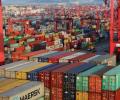
India's exports recorded a 13.78 per cent increase to USD 43.56 billion in April, marking the highest monthly outbound shipments in over four years, primarily driven by petroleum products. However, the trade deficit widened to a three-month high of USD 28.38 billion due to a 10 per cent rise in imports.

Escalating geopolitical tensions in West Asia are beginning to disrupt India's automotive supply chain, leading to rising commodity prices, logistics bottlenecks, material shortages, and pressure on consumer demand, with two-wheeler makers already raising prices.

India's electric vehicle (EV) market experienced a significant surge in financial year 2025-26 (FY26), with e4W registrations nearly doubling and e2Ws growing by over 20%, propelled by expanding charging infrastructure, diverse model launches, and accessible financing.

The Indian rupee appreciated by 23 paise to settle at 92.91 against the US dollar, driven by a weakening American currency, retreating crude oil prices, and renewed foreign institutional investor (FII) inflows amid increasing hopes of easing geopolitical tensions.

US President Donald Trump hinted at the possibility of the US seizing Iran's key oil export hub on Kharg Island, suggesting it could be done with minimal resistance. He also expressed his desire to take Iran's oil resources, while indicating potential negotiations and a possible deal with Iran.

India imports nearly 60 percent of its LPG, with most cargo previously coming through the Strait of Hormuz, now closed for commercial shipping.

The government has dismissed speculation of an imminent increase in petrol and diesel prices, assuring citizens that there are no plans for a hike despite rising crude oil costs.

Despite reporting a weaker-than-expected net loss of Rs 2,536 crore for Q4FY26, largely due to a significant non-cash forex loss, analysts remain optimistic about IndiGo's long-term prospects, citing strong demand trends, a favourable pricing outlook, and strategic cost-control measures.

Despite a sharp increase in import duties on gold and silver to 15 per cent, the precious metals are trading at significant discounts in the domestic market, with gold seeing discounts of up to $200 an ounce and silver up to $6 an ounce.
The Reserve Bank of India (RBI) net-bought $7.4 billion from the spot foreign exchange market in February, its highest buy since March 2025, before heavily intervening by selling dollars in March as the rupee declined over 4 per cent following a spike in crude oil prices.

Analysts predict continued volatility in Indian equity markets due to domestic macroeconomic data, F&O expiry, global developments including US tariff policies, and geopolitical tensions.

Despite international crude oil rates crossing USD 100 per barrel due to Middle East tensions, the Indian government plans to maintain current petrol and diesel prices, ensuring uninterrupted fuel supply across the country.

Indian defence stocks have seen an average year-on-year gain of 67 per cent, driven by renewed interest following 'Operation Sindoor' and a broader increase in global geopolitical tensions, with the combined market capitalisation of 18 firms increasing by approximately 2.3 trillion.

As tensions in the Middle East approach a critical juncture, reports have surfaced regarding a draft memorandum of understanding between the United States and Iran aimed at de-escalating the ongoing conflict, Iranian state media reported on Wednesday.

The Kremlin has stated that India is free to purchase oil from any country, dismissing claims that India agreed to reduce Russian oil imports. Russia maintains that energy trade with India benefits both nations and contributes to international energy market stability.

'Mark Mobius's life was dedicated to investing.'

'At the first sign of real trouble, that money will move. There will be a run.'

Around one full month of supply is firmly arranged with additional procurement being continuously finalised, and oil companies are successfully delivering over 5 million cylinders every day.

Mukesh Ambani, Asia's second richest man, has not drawn a salary from Reliance Industries for the sixth consecutive year, with dividends from his extensive shareholdings serving as his primary source of income.

India's trade with West Asia saw a significant decline of over 28% in April, marking the second consecutive month of contraction. This downturn is attributed to severe shipping disruptions stemming from the ongoing conflict involving the US, Israel, and Iran, particularly impacting the crucial Strait of Hormuz waterway.
